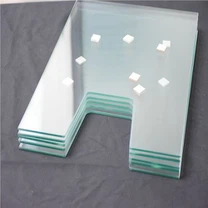
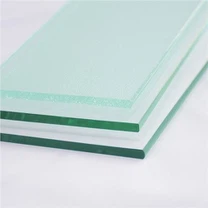
The primary difference between clear glass and ultra-clear glass lies in their level of transparency and the amount of iron oxide content in the glass.


1. Clarity and Color:
- Ultra-Clear Glass: Ultra-clear glass, also known as low-iron or extra-clear glass, is processed to reduce the iron content significantly. This results in a glass product with enhanced clarity and minimal color distortion. Ultra-clear glass appears clearer and more transparent than standard clear glass.
2. Iron Content:
- Ultra-Clear Glass: The iron content in ultra-clear glass is significantly reduced during the manufacturing process. This reduction in iron content minimizes the green tint, resulting in a glass product with higher light transmission and greater optical clarity.
3. Applications:
- Ultra-Clear Glass: Ultra-clear glass is often chosen when a higher level of transparency and color neutrality is desired. It is commonly used in applications where color accuracy and a clear view are crucial, such as in high-end architectural projects, display cases, aquariums, and photovoltaic panels.
4. Cost:
- Standard clear glass is generally more cost-effective than ultra-clear glass.
- Ultra-Clear Glass: Due to the additional manufacturing processes required to reduce iron content and enhance clarity, ultra-clear glass tends to be more expensive than standard clear glass.
In summary, while clear glass may exhibit a slight green tint due to iron impurities, ultra-clear glass is processed to minimize this tint, resulting in a higher level of transparency and color neutrality. The choice between clear and ultra-clear glass depends on the specific aesthetic and functional requirements of a given application, as well as budget considerations.